Short answer: platinum-cure silicone is the better material if you care most about heat resistance, stain resistance and a long service life, and you are comfortable spending roughly $1,100 and up. TPE is the better material if you want the softest possible body, a jiggle that reads as realistic in motion, and an entry price closer to $350. Neither material is “higher quality” in the abstract — they fail in different places, and the right choice depends on how you plan to store, clean and handle the doll rather than on which spec sheet looks better.
This guide is written from what actually goes wrong with each material over a two-to-five year ownership window: tearing at stress points, oil migration, colour transfer from dark fabric, and the cleaning routines that either extend or destroy a body. Everything below applies to full-size bodies and to torsos alike, with the differences called out where they matter.
TPE vs silicone at a glance
| Property | TPE (thermoplastic elastomer) | Platinum-cure silicone |
|---|---|---|
| Softness / squeeze | Softer, more give, more natural jiggle | Firmer, springier, less body movement |
| Surface detail | Good; fine detail softens over time | Excellent; holds sculpted detail for years |
| Heat tolerance | Deforms with sustained heat above roughly 40 °C | Stable well past boiling point |
| Porosity | Slightly porous; absorbs oils and dye | Non-porous; wipes clean |
| Stain risk from dark clothing | High — needs colour-fast fabric | Low |
| Oil / powder maintenance | Required every few weeks | Not required |
| Repairability | Easy — heat-weldable at home | Harder — needs silicone adhesive |
| Typical weight, 160 cm body | Around 30–36 kg | Around 36–42 kg |
| Realistic service life with normal care | 2–4 years | 5–10 years |
| Entry price at MKsexdoll | From about $351 | From about $1,099 |
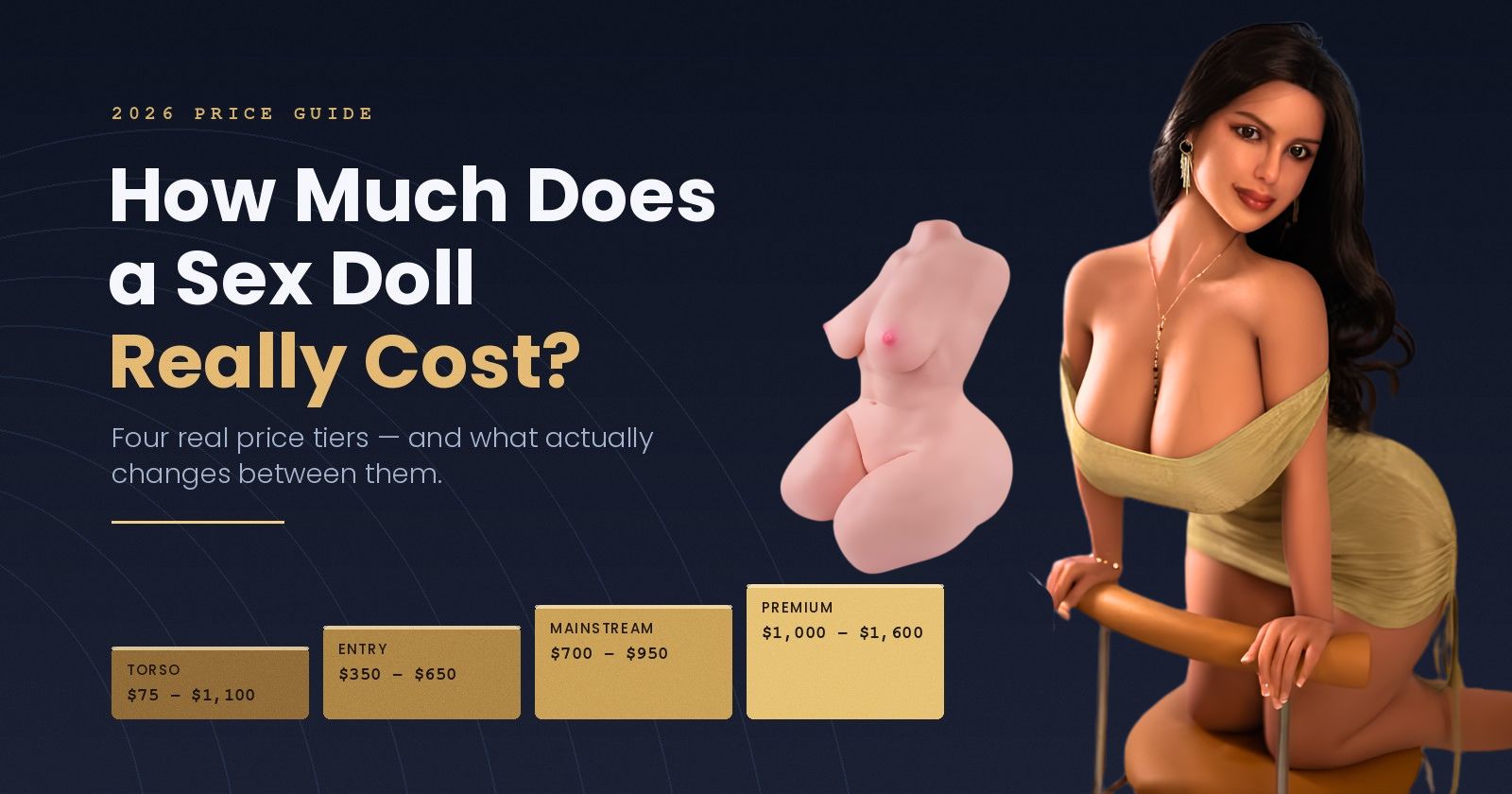
Those two price floors are the honest starting point for any material decision. On our own catalogue the TPE range currently starts around $351, while the silicone range starts around $1,099 — roughly a three-times difference for bodies of comparable size. If you want the full ladder of price tiers across materials, sizes and build types, our 2026 price guide breaks down what each tier actually buys.
What the two materials actually are
TPE in plain terms
TPE stands for thermoplastic elastomer. It is a blend of a rubber-like polymer with a plastic carrier and a mineral oil plasticiser. That oil is the whole story: it is what makes TPE soft, and it is also what slowly leaves the material over time. A new TPE body feels tacky-soft and slightly damp to the touch because oil is sitting at the surface. Three years later the same body feels drier and marginally firmer, because a portion of that plasticiser has migrated out and evaporated.
TPE is thermoplastic, which is the useful part for repairs. Apply controlled heat and the material re-flows and fuses to itself. A split at a hip crease can genuinely be closed at home with a heat tool and patience, and the repair holds.
Platinum-cure silicone in plain terms
Silicone used for realistic bodies is a two-part platinum-catalysed cure system. Once cured it is chemically finished: there is no plasticiser left to leave, so the material does not dry out, does not become tacky, and does not need oiling. It is also thermoset rather than thermoplastic — heating it does not soften it back into a workable state, which is why silicone repairs need adhesive rather than a heat gun.
Two grades circulate in this category. Platinum-cure silicone is the one you want. Tin-cure silicone is cheaper, cures with a by-product, and continues to shrink and degrade slowly for its whole life. If a listing simply says “silicone” with no cure type named, that is worth a question before you buy.
How they feel — and why demos are misleading
Almost every side-by-side video compares a TPE sample and a silicone sample by pressing a thumb into each. TPE wins that test every time, because thumb-pressure softness is exactly what TPE optimises for. It is also not the test that matters.
What separates the materials in practice is rebound. TPE deforms readily and returns slowly, which reads as soft flesh at rest and produces the jiggle people associate with realism in motion. Silicone deforms less and returns faster, which reads as firmer, more athletic flesh and produces much less secondary movement. Chest and glutes are where you notice it: a TPE chest moves, a silicone chest mostly holds its shape.
Sculpt quality complicates the comparison further. A well-sculpted silicone body with fine skin texture and painted detail will look more convincing in photographs than almost any TPE body, while the TPE body will feel more convincing in the hand. If looking at it matters more to you than handling it, that pushes towards silicone. Our WM Dolls range and Irontech range both offer bodies in each material, which is the cleanest way to compare the same sculpt across materials.
Heat: the one difference that is not a matter of taste
This is where TPE has a hard limit rather than a trade-off. Sustained heat above roughly 40 °C softens TPE enough to deform under its own weight. Practically, that rules out:
- Hot baths and hot showers with the doll in them
- Storing anywhere that sees direct summer sun through glass
- Hair dryers used close to the skin, including for drying after cleaning
- Electric blankets and heating pads left running under the body
Silicone has none of these restrictions in any realistic domestic scenario. It can be washed in hot water, it can sit in a warm room, and it can be dried with warm air. If you live somewhere with hot summers and no climate control, or if you specifically want to warm the body before use, that single factor may decide the question for you regardless of price.
Staining, oil and the maintenance you actually have to do
TPE care routine
TPE is slightly porous, which means two ongoing jobs.
Oiling. Every three to four weeks, apply a thin coat of mineral oil to the body, let it absorb for several hours, then dust with cornstarch-based powder to remove tackiness. This replaces plasticiser lost at the surface and is the single most effective thing you can do to extend TPE life. Skipping it for a year is the difference between a body that lasts four years and one that starts micro-tearing at the armpits and hip creases in two.
Colour control. Dark or unwashed fabric will transfer dye into TPE, and once dye is in, it is in — stain removers lift the surface but not the migrated colour. Wash new clothing separately before first use, prefer light colours, and do not leave the doll dressed in dark fabric for weeks between uses. Denim and black lace are the two most common causes of permanent staining we hear about.
Silicone care routine
Wash with mild soap and warm water, rinse, pat dry. That is the routine. No oiling, no powdering, no dye anxiety. Silicone will still pick up surface marks from very saturated dyes over long contact, but they generally wash out rather than migrate in.
Cleaning both materials safely
The rules that apply to both:
- Use mild pH-neutral soap. Alcohol, acetone and solvent-based cleaners attack both materials.
- Dry thoroughly. Trapped moisture in cavities is the most common cause of odour and mould in either material, and it has nothing to do with which one you bought.
- Use water-based lubricant only. Silicone-based lubricant bonds to silicone bodies and degrades TPE.
- Never machine-wash removable parts, and never use a hair dryer on hot near TPE.
- Store the body lying flat or hanging from the shoulders, not seated on a hard surface — long-term compression flattens both materials, and TPE far faster.
If you own a torso rather than a full body, cleaning is dramatically easier in both materials simply because the piece can be carried to a sink. That practical difference is a real argument for starting with a torso if maintenance effort is your main worry.
Durability and what actually fails first
Neither material typically fails in the middle of a panel. Both fail at stress concentrations.
On TPE, the first failures appear where the skeleton articulates against thin material: armpits, hip creases, the back of the knees, and the neck join. Under-oiled TPE develops fine surface cracking at these points, which then propagates into a tear. Caught early, a heat-weld repair is genuinely durable and costs almost nothing. Ignored, a 5 mm crack becomes a 5 cm split.
On silicone, the material itself outlives the joint. What fails is usually the bond between silicone and the internal frame, or a seam line from the mould. Silicone repairs need a matched silicone adhesive and are less forgiving of amateur work, but they are also far rarer.
The honest lifespan numbers, assuming the care routines above are actually followed: two to four years for TPE, five to ten for silicone. Halve both if the body is stored seated, never oiled (TPE), or cleaned with alcohol.
Cost over the whole ownership period, not at checkout
Checkout price is the wrong comparison, because the two materials have different running costs and different replacement intervals. A rough four-year view:
| TPE body | Silicone body | |
|---|---|---|
| Purchase | ~$351 and up | ~$1,099 and up |
| Oil and powder over 4 years | ~$40–70 | $0 |
| Repair kit / adhesive | ~$20 | ~$30 |
| Likely replacement inside 4 years | Possible | Unlikely |
| Realistic 4-year total | ~$410–840 | ~$1,130 |
TPE is still meaningfully cheaper over four years — the gap just narrows from roughly 3× to roughly 1.5–2×. Where silicone wins on pure economics is past the five-year mark, and only if you were going to keep the same body that long. Most first-time buyers do not, which is a legitimate argument for starting in TPE. If budget is the binding constraint, our budget range is where the entry-level TPE bodies sit.
Hybrid builds: silicone head, TPE body
Hybrids exist because the two materials’ strengths are concentrated in different places. The head is where sculpted detail, paint and heat exposure matter most, and where nobody needs jiggle. The body is where softness matters most and where fine detail is least visible.
A silicone head on a TPE body gives you a face that holds detail and paint for years on a body that still feels soft, at a price much closer to full TPE than to full silicone. The trade-offs are real but modest: a slight colour and finish mismatch at the neck join under bright light, and a fixed head that cannot be swapped as freely as a standard TPE head.
If you are choosing between a mid-range full-TPE body and a hybrid at the same price, the hybrid is usually the better buy, because the failure mode you will notice first on TPE is facial detail softening, not body feel.
Which material fits which buyer
Choose TPE if
- Softness and body movement are the point for you
- Your budget is under about $800
- You are willing to oil and powder roughly monthly
- You can store somewhere that stays under about 30 °C
- You are comfortable doing a small heat repair yourself
Choose silicone if
- Photographic realism and sculpted detail matter more than squeeze
- You want a five-plus year body and will keep it that long
- You want a genuinely low-effort cleaning routine
- Heat is a factor — hot climate, warm baths, no climate control
- Staining from clothing is a concern you would rather not manage
Choose a hybrid if
- Face quality is your priority but you want a soft body
- Your budget sits between the two ranges
Choose a torso first if
- Storage space or discretion is the constraint
- You want to test material preference before committing four figures
- Weight matters — torsos start under 10 kg against 30 kg-plus for a full body
Our torso range starts around $76, which makes it by far the cheapest way to find out which material you actually prefer in the hand before spending real money on a full body. The male range and curvy range are both available in TPE, which keeps the entry cost down while you decide.
Five material claims that are not true
“Silicone is medical grade, TPE is not.” “Medical grade” is a marketing phrase, not a certification either material earns as a finished body. Both are body-safe when properly formulated; the meaningful question is who formulated it, not what adjective is attached.
“TPE is toxic.” Correctly manufactured TPE from a named factory is body-safe. Anonymous unbranded TPE with no factory attribution is the actual risk, and the same is true of anonymous silicone.
“Silicone never stains.” It stains far less. Very saturated dye in prolonged contact can still leave a mark. The difference is that on silicone the mark usually sits on the surface and washes off.
“Heavier means better.” Weight tracks material density and skeleton mass, not quality. A heavier body is harder to move, harder to clean and harder to store, and above roughly 35 kg most people find handling becomes the limiting factor.
“You can convert TPE to feel like silicone with the right powder.” Powder changes surface tackiness only. It does nothing to rebound, heat tolerance or porosity.
How to tell which material you actually received
Material substitution is the most common quiet complaint in this category, and it is easy to check on arrival without damaging anything. Four tests, in order of how much they tell you:
- Smell. Fresh TPE has a faint sweet-plastic odour from the plasticiser. Cured silicone is essentially odourless. A strong vinegar smell indicates tin-cure silicone, not platinum-cure.
- Water bead test. Put a drop of water on an inconspicuous area. On silicone it beads and sits. On TPE it flattens and starts to soak into the surface within a minute.
- Warm water test. Hold a warm — not hot — damp cloth against a hidden area for thirty seconds. TPE becomes noticeably tackier. Silicone does not change.
- Rebound test. Press a fingertip in five millimetres and release. Silicone returns almost immediately. TPE returns visibly more slowly and may hold a faint mark for a few seconds.
Do these within your return window. A body sold as silicone that fails the water bead test is a returns conversation, not a repair project.
Storage, seasons and the skeleton underneath
Material choice determines how forgiving storage can be, and storage is where most avoidable damage happens.
Position
Store lying flat on a soft surface, or hanging from the shoulder mount if the body has one. Seated storage puts the entire body weight on the glutes and thighs for weeks at a time, and both materials take a permanent flat spot from it — TPE within months, silicone over years. Avoid folding limbs tightly against the body for long periods; the crease becomes a stress line.
Temperature and light
Keep TPE below roughly 30 °C and out of direct sunlight through glass, which is hot enough in summer to soften a surface facing the window. Silicone tolerates heat but not indefinite UV exposure — long direct sun will fade painted detail on either material.
The skeleton is the part nobody asks about
Both materials are moulded over a steel or alloy frame with articulated joints, and the frame determines how the body ages as much as the skin does. Bolted shoulder and hip joints hold position and can be re-tightened; riveted joints loosen over time and cannot. Ask which is fitted before buying, because a loose hip joint in an otherwise perfect body is the failure that ends its useful life.
Weight distribution matters here too. A 160 cm silicone body at around 40 kg puts significantly more load through those joints than the same sculpt in TPE at 32 kg, which is one reason silicone bodies more often use a heavier frame — and part of why they cost more.
Pre-purchase checklist
- Confirm the exact material — TPE, platinum-cure silicone, tin-cure silicone, or hybrid — and get it in writing.
- Ask for the factory name. A seller who will not name the factory is a seller who cannot support a warranty.
- Check stated weight against the size. A 160 cm body under 25 kg has a hollowed body or a light skeleton.
- Ask which skeleton is fitted and whether shoulders and hips are bolted or riveted.
- Ask what the repair path is: does the seller supply matched material for repairs?
- Confirm shipping and storage conditions for your climate, especially for TPE in summer.
- Read the return terms for damage in transit before you pay, not after.
Our buying process page covers what MKsexdoll ships, from where, and on what terms; the team will confirm cure type and factory for any specific listing on request.
Frequently asked questions
Is silicone or TPE better for a sex doll?
Silicone is better for heat resistance, stain resistance, sculpted detail and lifespan. TPE is better for softness, natural body movement and price. For a first purchase under $800, TPE is usually the more sensible choice; for a body you intend to keep beyond five years, silicone costs less per year of ownership.
How long does a TPE sex doll last?
Two to four years with monthly oiling, flat or hanging storage, and light-coloured clothing. Without oiling, surface cracking typically starts at the armpits and hip creases within eighteen months to two years.
How do you clean a sex doll?
Wash the body with mild pH-neutral soap and warm — not hot — water, rinse, then dry completely with a soft towel and air. Dry cavities thoroughly, since trapped moisture causes odour in both materials. Never use alcohol, acetone or solvent cleaners, and never use a hot hair dryer near TPE. For TPE, follow cleaning with a light mineral oil coat and cornstarch-based powder every three to four weeks.
Can you use hot water on a TPE doll?
No. Sustained temperatures above roughly 40 °C soften TPE and allow it to deform under its own weight. Warm water is fine; hot baths, hot showers and hot air drying are not. Silicone has no practical domestic heat limit.
Does TPE stain from clothing?
Yes, readily. TPE is slightly porous and absorbs dye from dark or unwashed fabric, and migrated dye cannot be removed. Wash new clothing separately first, prefer light colours, and do not store the body dressed in dark fabric.
Why is silicone so much more expensive?
Platinum-cure silicone raw material costs several times more than TPE by weight, cures more slowly so each body occupies a mould longer, and demands more skilled finishing and painting. The price difference reflects material cost and production time, not a margin decision.
What is a hybrid sex doll?
A body that combines a platinum-cure silicone head with a TPE body. It delivers silicone-grade facial detail and paint durability on a soft TPE body at a price much closer to full TPE. The visible trade-off is a possible slight finish mismatch at the neck join.
Which material is better for a torso?
TPE, for most buyers. Torsos are handled far more than full bodies, so softness matters more, and their smaller surface area makes the oiling routine trivial. Silicone torsos make sense if you want to use warm water freely or want the piece to last many years.
Is silicone or TPE easier to repair?
TPE, clearly. It is thermoplastic, so controlled heat re-fuses the material to itself and a home repair on a small split holds well. Silicone is thermoset and needs a matched silicone adhesive, with less margin for error.
Where to go next
If you have settled on a material, the two category pages are the fastest route: silicone bodies and TPE bodies. If budget is the deciding factor, start with the 2026 price guide and then the budget range. If you would rather test material preference cheaply first, the torso buying guide is the place to start.
What each material means for your cleaning routine
The material difference described above translates directly into different day-to-day handling. TPE needs water under 40 °C, pH-neutral soap only, longer drying and powdering after every wash; silicone tolerates hotter water, can be disinfected more aggressively and never needs powder. Applying silicone methods to a TPE doll is the single most common cause of avoidable damage. The full material-specific routine, with timings and a do-not list, is in the cleaning and care guide, and storage — where silicone is also the more forgiving material — is covered in the storage guide.