Short answer: in 2026 a full-size realistic sex doll typically costs between $350 and $1,600, with most buyers landing near $750. A torso costs far less — roughly $75 to $1,100, with a typical price around $300. Those figures are not industry guesswork: they are the live price range across the MKsexdoll catalogue at the time of writing.
Price is the first question almost every buyer asks and the one the industry answers worst. Store pages quote a number without saying what changes between tiers. Forums quote extremes. Marketplaces quote prices that quietly exclude shipping, customs, or a head. This guide does the opposite: it breaks the market into four real price bands, says plainly what you get in each, and names the upgrades that change your daily experience versus the ones that only change the invoice.
Sex doll price at a glance (2026)
| Type | Entry price | Typical price | Upper range | Who it suits |
|---|---|---|---|---|
| Torso / partial body | ~$75 | ~$300 | ~$1,100 | First-time buyers, limited storage, discretion-first |
| Full-size TPE doll | ~$350 | ~$700–$800 | ~$1,100 | Most buyers; best balance of realism and cost |
| Full-size silicone doll | ~$1,100 | ~$1,220 | ~$1,560 | Buyers prioritising facial realism and easy cleaning |
| Male dolls | ~$1,130 | ~$1,145 | ~$1,345 | Women and couples; a smaller, premium-weighted segment |
Two things stand out in that table, and both matter more than the headline numbers.
First, the gap between a torso and a full-size doll is roughly 2.5×, not 10×. People often assume torsos are a token product and full bodies are a luxury purchase. In practice the two overlap: a premium torso can cost more than an entry-level full-size doll.
Second, the price spread inside the full-size category is narrower than most buyers expect. Half the catalogue sits between about $710 and $950. That middle band is where the real decision happens, and it is where this guide spends most of its time.
What actually drives the price
Before the tiers, it helps to know what you are paying for. Five factors account for most of the variation between two dolls that look similar in photographs.
1. Material: TPE versus silicone
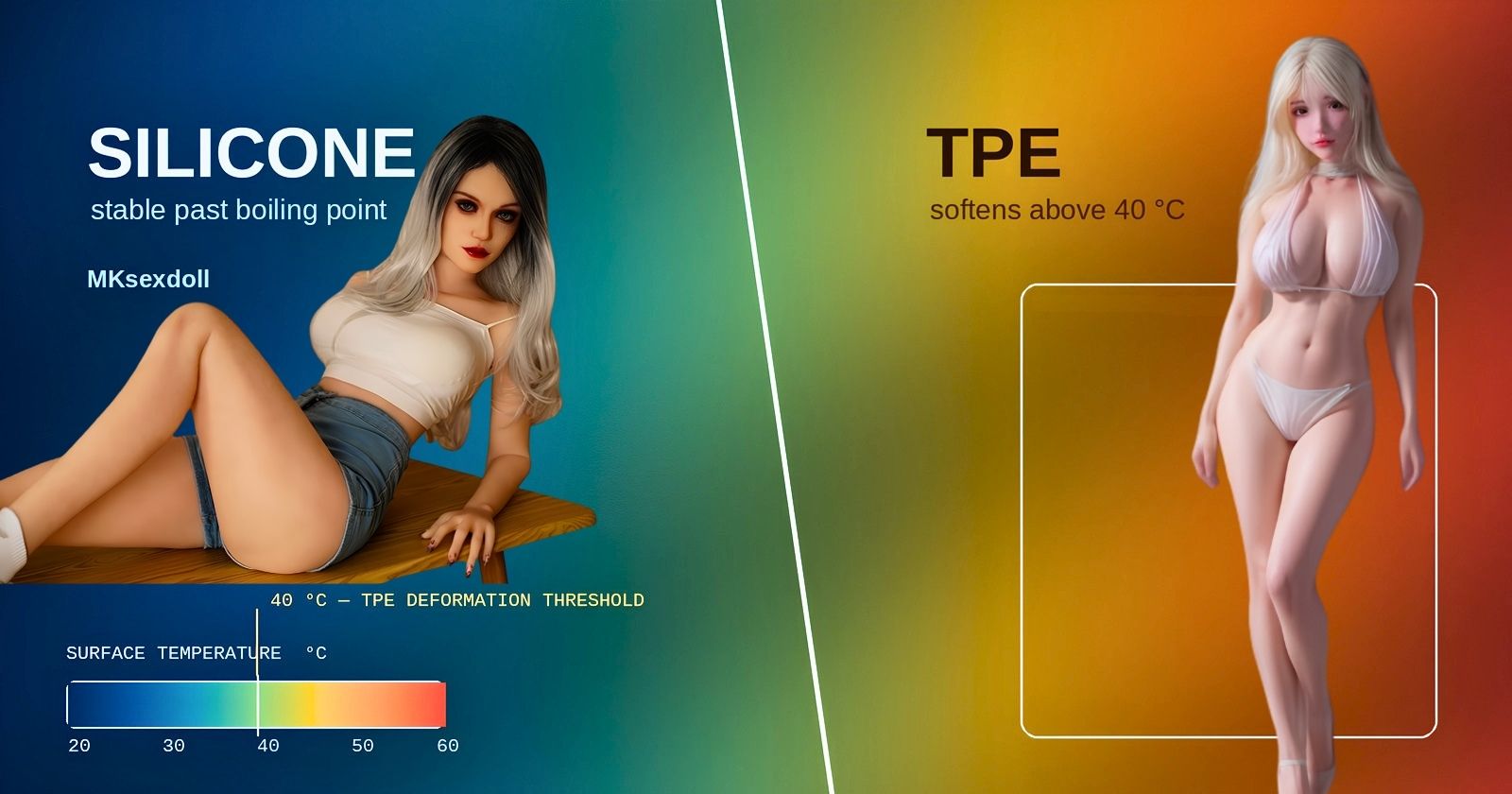
TPE (thermoplastic elastomer) is softer, more forgiving under pressure, and much cheaper to mould. Silicone holds fine detail better, resists staining and heat, and is easier to sanitise — but costs roughly 40–60% more for a comparable body. This single choice explains most of the jump from the $700 band to the $1,200 band. We cover the trade-off in depth in our guide to TPE and silicone materials.
2. Height and weight
Material cost scales with volume, so a 165 cm doll uses substantially more material than a 140 cm one. Weight also drives packaging and freight cost. This is why compact models sit at the bottom of the range — and why our guide on what to check before buying a compact doll spends as much time on handling as on looks.
3. Skeleton quality
The internal frame is invisible in every product photo and is the single most common source of long-term disappointment. Budget skeletons use lighter-gauge steel and simpler joints; they hold fewer positions and loosen sooner. Mid-tier and above use articulated shoulders, a flexible spine, and standing feet. You cannot see this in a listing, which is exactly why it is worth asking about.
4. Head, face and finishing
Hand-applied eyebrows, layered skin tones, implanted hair and hand-painted makeup are labour, and labour is the least compressible cost in this industry. A $250 price difference between two otherwise identical bodies is usually finishing work on the head.
5. Where it ships from
A doll shipped from a domestic or regional warehouse costs more up front but arrives in days rather than weeks and carries no customs surprise. Our UK and EU stock collection exists for exactly this reason. Factory-direct shipping is cheaper but slower, and the landed cost is not always lower once duty is added.
Tier 1: Under $300 — torsos and partial bodies
This is the genuine entry point to the category, and for a large share of first-time buyers it is the right one.
What you get: a partial body — typically hips and thighs, a bust, or a combined mid-section. Weight ranges from about 4 kg to 20 kg. Material is almost always TPE at this price. Storage is trivial compared with a full-size doll, which for many buyers is the deciding factor rather than the price.
What you give up: there is no skeleton to speak of, no posing, and no full-body presence. If the appeal for you is companionship rather than function, this tier will not deliver it.
Who should buy here: anyone testing whether they actually want this product, anyone living with roommates or family, and anyone whose storage situation makes a 30 kg full-size doll impractical. Our torso buying guide covers sizing and weight in detail — weight is the specification people underestimate most.
Tier 2: $350–$650 — entry-level full-size dolls
What you get: a complete body with a functional skeleton, usually TPE, usually in the 100–150 cm range. Finishing is machine-led rather than hand-led: simpler makeup, wig rather than implanted hair, standard eye sets.
What you give up: refinement. Seam lines are more visible. The skeleton holds fewer positions and may not support standing. Skin texture is uniform rather than layered.
The honest assessment: this tier delivers most of the experience for roughly half the price of the mid-tier. What it does not deliver is longevity. Budget skeletons and thinner TPE are the two components that determine whether a doll lasts two years or six.
Tier 3: $700–$950 — the mainstream tier
Half of all full-size dolls sold sit in this band, and there is a good reason for that.
What you get: a full articulated skeleton with standing feet, hand-finished facial detail, layered skin tone, and a body in the 155–170 cm range. TPE at the lower end, entry silicone or silicone-head hybrids at the upper end. Head interchangeability is standard, so you can change the look without replacing the body.
What you give up: very little that affects daily use. The remaining gap to the premium tier is facial realism under close inspection and the material’s resistance to staining over years.
The honest assessment: if you are buying one doll and keeping it, this is the tier to buy in. The step from Tier 2 to Tier 3 buys durability and posing range. The step from Tier 3 to Tier 4 buys detail you notice in photographs more than in use.
Most of our life-size collection sits in this band, and it is where the petite and flat-chest styles and the fuller stylised designs both concentrate.
Tier 4: $1,000–$1,600 — premium and specialist
What you get: platinum-cure silicone bodies or silicone heads on TPE bodies, hand-implanted hair and eyebrows, multi-layer skin painting, upgraded skeletons with wider shoulder and hip articulation, and in some cases heating or articulated jaw features. This is also where the male doll range and most brand-name bodies from makers like WM, Irontech and Zelex live.
What you give up: nothing but money — with one caveat. Silicone is firmer than TPE. Buyers who move up expecting “the same but better” are sometimes surprised by the change in feel. Firmness is a preference, not a quality ranking.
Who should buy here: buyers who have owned a doll before and know what they want changed; buyers for whom facial realism is the point; and buyers who plan to keep the doll for many years, where silicone’s resistance to staining and degradation genuinely pays back.
“Cheap sex dolls”: what the word actually hides
Search volume for cheap sex dolls and its equivalents in Dutch, Swedish, French and German has been rising steadily through 2025 and 2026. It is one of the most-searched phrases in the category. It is also the phrase most likely to lead a buyer to a bad purchase, because “cheap” describes a price, not a product.
There are three different things sold under that word, and only one of them is a good idea.
Cheap because it is smaller or simpler
A compact doll or a torso costs less because it uses less material and less labour. Nothing is being hidden. This is legitimate value, and it is where most first-time buyers should start. Our budget-focused collection and the notes on buying at the lower end both cover this band.
Cheap because the specification was quietly reduced
Same photograph, thinner TPE, lighter skeleton, no standing feet, generic head. The listing does not lie; it simply does not mention what was removed. This is the most common trap, and the defence is boring but effective: ask for the weight and the skeleton specification before ordering. A full-size doll that weighs noticeably less than comparable models at the same height has less material in it.
Cheap because the price is not the price
A low headline figure that excludes shipping, excludes a head, or ships from a location that attracts customs duty. Compare landed cost, never listed cost. If a store cannot tell you the delivered total before you order, that is the answer.
A note on our own catalogue
In the interest of being useful rather than promotional: our budget collection’s median price is close to the median of our full catalogue. That is because it aggregates discounted premium models alongside genuinely entry-level ones. If your goal is the lowest landed cost, sort by price ascending rather than trusting the category name — on our site or anyone else’s.
The costs that are not in the price
Roughly 10–20% of the true first-year cost of ownership sits outside the purchase price. Budgeting for it in advance is the difference between a good experience and an expensive lesson.
| Item | Typical cost | Necessary? |
|---|---|---|
| Shipping (regional warehouse) | Often included | Yes |
| Shipping (factory direct) | $80–$200 | Yes |
| Customs / import duty | 0–25% of value, region dependent | Region dependent |
| Storage solution | $40–$150 | Strongly recommended |
| Cleaning and care kit | $20–$50 | Yes |
| Renewal powder / talc | $10–$20 per year | Yes for TPE |
| Spare wig or eye set | $15–$60 | Optional |
| Heating insert | $30–$90 | Optional |
Storage deserves special mention because it is the cost people skip and then regret. A full-size doll left lying on a mattress will develop pressure marks in the TPE. Our storage guide covers hanging, casing and flat-storage options and what each does to the material over time.
Which upgrades are worth paying for
Configurable options are where a $750 order quietly becomes a $1,100 order. Here is our honest ranking, based on what buyers report using and what they report forgetting about.
Worth it for most buyers
- Upgraded skeleton with standing feet. Changes storage, posing and photography. The single best value upgrade in the category.
- A second head. Cheaper than a second doll and changes the experience more than any other single option.
- Silicone head on a TPE body. Buys most of the facial realism of a full silicone doll at a fraction of the price difference.
Worth it for some
- Body heating. Genuinely changes the experience, but adds cleaning complexity and a failure point.
- Implanted hair. Looks better; needs real maintenance and cannot be swapped out in seconds like a wig.
- Gel-filled bust. Softer and more natural in movement; adds weight and cost.
Usually not worth it
- Voice or sound modules on non-AI bodies. Novelty that most owners disable within weeks.
- Extra eye and wig sets bought at checkout. Cheaper later, once you know what you actually want.
- Premium packaging. Pays for a box.
AI and robotic features are a separate conversation. They currently add several hundred dollars and remain an early-generation technology; our robotic doll collection is small deliberately.
How to set your own budget in five minutes
- Decide full-size or torso first. This is a storage and lifestyle decision, not a budget one, and it halves the search space immediately.
- Set a landed-cost ceiling, not a product-price ceiling. Add roughly 15% to whatever number you have in mind, then shop under the original figure.
- Pick material second. If facial realism under close inspection matters most, budget for silicone or a silicone head. If softness matters most, TPE, and spend the difference on the skeleton.
- Choose height third. Weight rises fast with height. A 170 cm doll can weigh over 40 kg; be certain you can move it alone.
- Spend what is left on the skeleton, not on accessories. Accessories can be added at any time. A skeleton cannot.
Is a more expensive doll actually better?
Up to about $900, yes — reliably. Each step buys measurably better materials, a better frame, and more hand-finishing. Above that, you are buying refinement, and refinement is subjective. A $1,400 silicone doll is not twice the product of a $700 TPE doll. It is a different material with different properties, finished to a higher standard, that some buyers strongly prefer and others quietly regret.
The buyers who report the most satisfaction are not the ones who spent the most. They are the ones who matched the purchase to how they actually intended to use it — and who budgeted for storage and care before they ordered rather than after.
Price differences by region: UK, EU, US and beyond
The same doll can cost meaningfully different amounts depending on where it ships from and where it lands. This is the part of the price that buyers discover last and resent most.
United Kingdom
UK buyers face the widest gap between listed and landed cost when ordering from outside the country: import VAT plus a handling fee applied at delivery. A doll listed at £600 can arrive with an unexpected three-figure charge. Buying from UK-held stock removes that variable entirely and cuts delivery from weeks to days. UK buyers should also be aware that customs enforcement in this category is stricter than in most markets, and that any doll with childlike proportions is prohibited — a legal line, not a preference.
European Union
Intra-EU shipping from an EU warehouse arrives duty-free and typically within a week. Orders from outside the EU attract VAT at the destination country’s rate plus, above certain thresholds, customs duty. For buyers in the Netherlands, Sweden, Germany and France — where searches for budget models are among the highest in the category — the practical advice is the same: filter for EU stock first, then compare on price. A €50 cheaper doll shipped from outside the EU is usually not cheaper.
United States
US buyers generally see the smallest gap between listed and landed cost, with duty-free thresholds that cover most orders and a competitive domestic warehouse market. This is why US listed prices often look higher than European ones while the delivered total is comparable.
Everywhere else
Australia, Canada and New Zealand apply the strictest import rules in the category alongside GST on import. Buyers in these markets should confirm both duty treatment and product compliance before ordering rather than after.
New, discounted or second-hand: does the route change the price?
Three routes exist and only two of them are sensible.
New from a specialist retailer
Highest confidence, full warranty, verifiable material and skeleton specifications, and the only route where you can ask a question before you spend. This is the baseline against which the other two should be measured.
Discounted or clearance stock
Genuine value. Warehouse clearance, discontinued colourways and previous-season heads are sold at real discounts because the retailer wants the shelf space, not because anything is wrong with the product. This is the single most reliable way to buy above your budget tier. The trade-off is choice: you take what is in stock.
Second-hand
We do not recommend it, and not for commercial reasons. TPE and silicone are porous materials that cannot be fully sanitised once used, there is no way to verify a seller’s cleaning history, and the material degradation that determines a doll’s remaining life is invisible in photographs. The saving is real; so is the risk.
Common pricing mistakes
- Comparing listed prices across regions. Compare delivered totals including duty, or you are comparing nothing.
- Buying at the bottom of the full-size range to “try it”. If you want to test the category, buy a torso. An entry-level full-size doll is a compromised version of the thing you actually want, at four times the price of the thing that would have answered your question.
- Spending the upgrade budget on accessories. Skeleton first. Everything else can be added later.
- Ignoring weight. The most common post-purchase complaint is not quality. It is that the doll is harder to move and store than expected.
- Trusting a category name. “Cheap”, “premium” and “best-seller” are merchandising labels. Sort by price and read the specification.
Frequently asked questions
How much does a realistic sex doll cost in 2026?
A full-size realistic doll costs roughly $350 to $1,600, with a typical price near $750. Torsos range from about $75 to $1,100, typically around $300. Silicone bodies start near $1,100; TPE bodies start near $350.
Why are some sex dolls under $400?
Usually because they are smaller, use TPE rather than silicone, and use a simplified skeleton with machine-applied finishing. That is legitimate value. Be cautious when a full-size doll is priced far below comparable models at the same height — the difference is almost always material thickness or skeleton grade.
Is TPE or silicone better value?
TPE is better value for most buyers: softer, substantially cheaper, and perfectly durable with proper care. Silicone is worth the premium if facial realism, stain resistance or easy sanitising are your priorities. A silicone head on a TPE body is the best-value compromise.
What is the cheapest way to buy a sex doll?
Buy a torso, or buy a compact full-size TPE model from a regional warehouse so shipping is included and there is no customs charge. Compare delivered totals rather than listed prices — that comparison alone changes the ranking more often than not.
Do sex doll prices include shipping?
It depends on the source. Stock held in a regional warehouse usually ships included; factory-direct orders usually do not and may attract import duty. Always confirm the delivered total before ordering. Our shipping information page sets out how we handle this.
How long does a sex doll last?
With correct cleaning, powdering and storage, a mid-tier TPE doll typically lasts three to five years of regular use, and silicone longer. Storage method matters more than price: prolonged pressure on one area is the most common cause of premature damage.
How much should a first-time buyer spend?
Either under $300 on a torso to find out whether the product suits you, or $700–$900 on a mid-tier full-size doll if you already know it does. The $350–$650 band is the one most likely to be replaced within two years.
Where to go next
If you have a budget in mind, the fastest next step is to browse by what that budget actually buys: torsos under $300, TPE full-size dolls in the mainstream band, or silicone models at the premium end. If you are still deciding on format, the torso guide and the male doll guide for women and couples both cover the practical questions that price lists cannot answer. Anything we have not covered, our help centre and contact page are the places to ask.
Prices in this guide reflect the live MKsexdoll catalogue in August 2026 and are quoted in USD. Ranges are given as observed minimum, median and maximum across the relevant collection. Prices change; the tier logic does not.
Material is the other half of the price question
Two bodies at the same price can be built from completely different materials, and that single difference changes running cost, cleaning effort and how long the body lasts. Our silicone vs TPE material guide puts real four-year numbers against both: TPE at roughly $410–840 all-in, silicone at roughly $1,130, once oil, powder and likely replacement are counted.
Shop by material in the TPE range or the silicone range, or start with a torso from $76 to test material preference cheaply.
The running cost nobody budgets for
Purchase price is only part of the total. A maintenance kit — bulb syringe, pH-neutral soap, microfibre towels, renewal powder, drying sticks and stain cream — costs $35–$70 and lasts about a year, and proper storage adds a one-off $70–$150. Both are itemised in the cleaning and care guide and the storage guide. Against a doll in the $600–$2,000 band, that is the difference between a three-year product and a one-year one.
Furry and anthro builds price differently again: see what furry dolls cost in 2026.